Parliament moves to halt Zoka forest destruction.
On Tuesday, November 17, 2026, Hon. Ann Maria Nankabirwa, the Kyankwanzi District Woman MP and Deputy Chairperson of Parliament’s Committee on Environment and N...
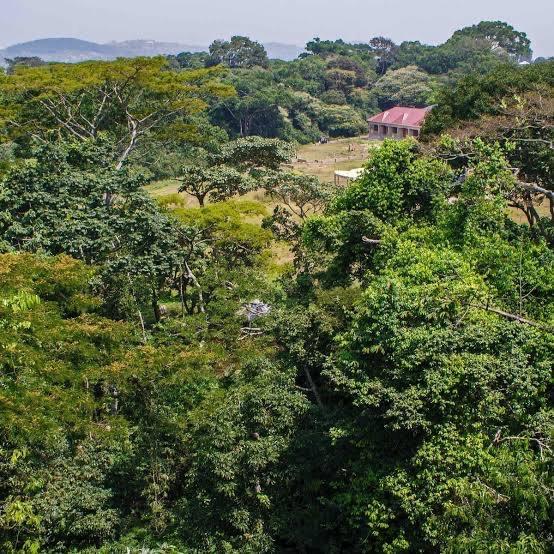
On Tuesday, November 17, 2026, Hon. Ann Maria Nankabirwa, the Kyankwanzi District Woman MP and Deputy Chairperson of Parliament’s Committee on Environment and Natural Resources, tabled a long-awaited report on national forest loss. Originally ordered by Parliament in August 2024—before the 11th Parliament ended without receiving its findings—the report details how unchecked logging, charcoal burning, and agricultural encroachment are stripping Uganda of its vital carbon sinks, accelerating local heat extremes, and feeding the global climate crisis.
The figures laid before the House paint an alarming picture of ecological retreat. According to the committee’s findings, Uganda has lost 4.9 million hectares of forest cover since 1990. As of November 2025, 182,089 hectares—or 14 percent—of the country's 506 gazetted Central Forest Reserves had been encroached upon.
The report singled out severely degraded forests, highlighting Zoka Central Forest Reserve as one of the hardest hit by encroachment and deforestation. Spanning Itirikwa and Ukusijoni sub-counties, Zoka saw farmland expand from approximately 500 hectares to 1,044 hectares as land meant for conservation was cleared for cultivation. Meanwhile, well-stocked forest cover inside the reserve declined from 2,233 hectares in 2015 to 2,048 hectares in 2026, losing nearly 200 hectares of its canopy.
Beyond cleared acreage and commercial charcoal kilns, lawmakers highlighted the rise of permanent infrastructure inside the protected area, including schools, government facilities, and a perimeter fuel station supporting logging operations. These findings followed an August fact-finding mission by the committee, during which MPs discovered extensive logging, active machine saws in use, and evidence of truck access 12 kilometres deep inside the forest.
Lawmakers emphasized that the degradation of Zoka's hardwood canopy releases stored carbon dioxide and erodes local microclimates, compounding regional heatwaves. They warned that the reserve is vital to northern Uganda's climate survival, cautioning of severe environmental devastation without it.
While tabling the report, Nankabirwa recommended that the Ministry of Water and Environment and the Uganda Wildlife Authority urgently demarcate the physical boundaries of Zoka Central Forest Reserve alongside the adjacent East Madi Wildlife Reserve to halt further destruction.
According to local leaders and conservationists, the rainforest has become a hotbed for plundering valuable hardwood species, particularly Afzelia africana and Shea trees, which are harvested for timber and commercial charcoal. During their August visit, MPs also found makeshift camps occupied by illegal loggers and charcoal dealers, alongside women and children living inside the protected reserve.
William Amanzuru, Team Leader of the environmental group Friends of Zoka, warned that well-connected individuals have left the forest virtually gone.
"Every day, we cry for this forest to be protected because it has been under siege for decades," Amanzuru said,
He further alleged that illegal operators and petrol station builders are often shielded from enforcement by anonymous figures within the military.
Even directives have struggled to halt the destruction. In recent years, former Fourth Infantry Division Commander Maj Gen Felix Busizoori who is now Deputy Commander of the UPDF Land Forces introduced a ban on transporting forest products from Zoka, yet illicit trade persisted.
The scale of the vanishing canopy was so severe that President Yoweri Museveni failed to recognize the forest from the air during a trip to the region in September 2026. While flying over Adjumani in his chopper ahead of the Adjumani West by-election, Museveni was astonished by the degraded landscape.
"Whenever I come to Adjumani from Entebbe by helicopter, I pass over Zoka Forest. But today, when I looked through the window, there was no Zoka. I thought I was lost. What happened to Zoka?" Museveni asked on September 15, furiously warning that the government would "have war" with those responsible for destroying the reserve.
Environmental scientists emphasize that tropical forests act as critical carbon sinks, absorbing carbon dioxide from the atmosphere and regulating regional rainfall. When hardwoods like Shea and Afzelia africana are felled and burned for charcoal, decades of stored carbon are released back into the atmosphere as greenhouse gases thus driving global warming while stripping local communities of their natural cooling shield.
During Tuesday's debate, Terego District Woman MP Rose Obigah questioned why authorities had successfully cleared encroachers in the Elgon Region while Zoka remained under siege.
"Zoka is our only hope. Without Zoka, I don't know. When you go to Adjumani, Rt Hon Speaker, around December, you can never sleep when you don't have AC. Now, without Zoka, how will it be? We are so devastated," Obigah told the House.
Deputy Attorney General Jackson Kafuuzi echoed his alarm, noting that the ecological damage extends across the country.
"In our areas, when we were growing up, we had forests. There are kinds of birds that we used to see every day that we can no longer see," Kafuuzi said. "Every morning you would see fog as a result of the humidity arising out of those forests; you can no longer see that. Nowadays sunshine burns us as if it is hitting a rock."
Following the debate, Parliament presided over by Deputy speaker Thomas Tayebwa, formally adopted the committee's report and its recommendations for urgent intervention.
Aligning with a September resolution by the Adjumani District Council, lawmakers backed the call for the Ministry of Water and Environment and the Uganda Wildlife Authority to clearly open and demarcate Zoka’s boundaries with the East Madi Wildlife Reserve. Parliament also urged the eviction of illegal encroachers, the removal of unauthorized facilities, and stronger enforcement to dismantle commercial charcoal networks and restore northern Uganda's last natural ttropical forests.