
The KCB 11 environmental defenders versus Ugandas shrinking civic space.
On 23 April 2025, eleven Ugandan environmental defenders walked into the Kampala headquarters of KCB bank to deliver a letter concerning the bank’s financing of...
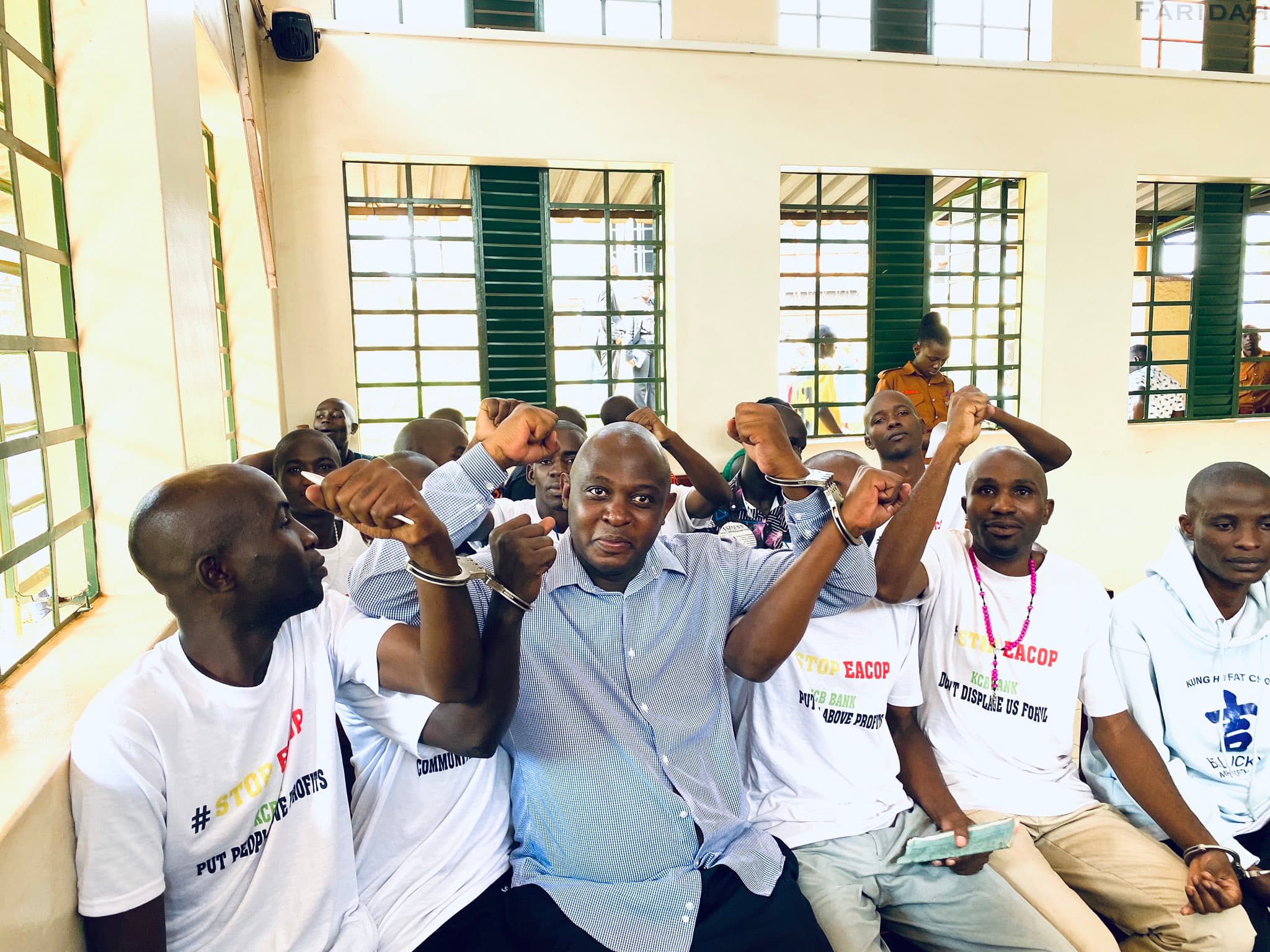
On 23 April 2025, eleven Ugandan environmental defenders walked into the Kampala headquarters of KCB bank to deliver a letter concerning the bank’s financing of the East African Crude Oil Pipeline (EACOP). Kenya commercial bank’s (KCB) responded with an arrest. Two days later, they were charged with criminal trespass and remanded to Luzira Maximum Security Prison. Bob Barigye, Nalusiba Phionah, Guston Tukamushaba,Raymond Bintukwanga, Mohammed Ssentongo, Misach Saazi, Joseph Ssengonzi, Keith Nahamya, Umar Kasimbe, Gilbert Nayebare became the KCB 11.
On Tuesday the 29th of September 17 months later the case was dismissed becoming a powerful example of a question that deserves serious public scrutiny; when does the use of criminal proceedings to respond to peaceful civic activity become a form of repression? The answer should not be assumed simply because someone is an activist or perhaps has a different ideology. Courts are the custodians of law thus are mandated to determine guilt or innocence.
However, critics and several members of the public argue that courts have become instruments of pressure when arrested, pretrial detention, repeated adjournments and prolonged uncertainty impose punishment long before a case is resolved.
According to the KCB 11, they went to bank to express opposition to the bank’s role in financing EACOP, only for a bank official to direct them to the basement after indicating that they would meet a senior official, where police and security personnel were waiting subsequently arresting them yet the prosecution’s account is different.
The prosecution alleged that the activists unlawfully accessed KCB premises with intent to harm, leading to the criminal-trespass charges. The activists, however, during their 85 days in Luzira maximum prison maintained that they had been peacefully petitioning the bank, even after they were granted bail on 17 July 2025. During their detention, bail was denied three times and court proceedings were repeatedly adjourned due to the trial magistrate being indisposed as well as absence of the complainant.
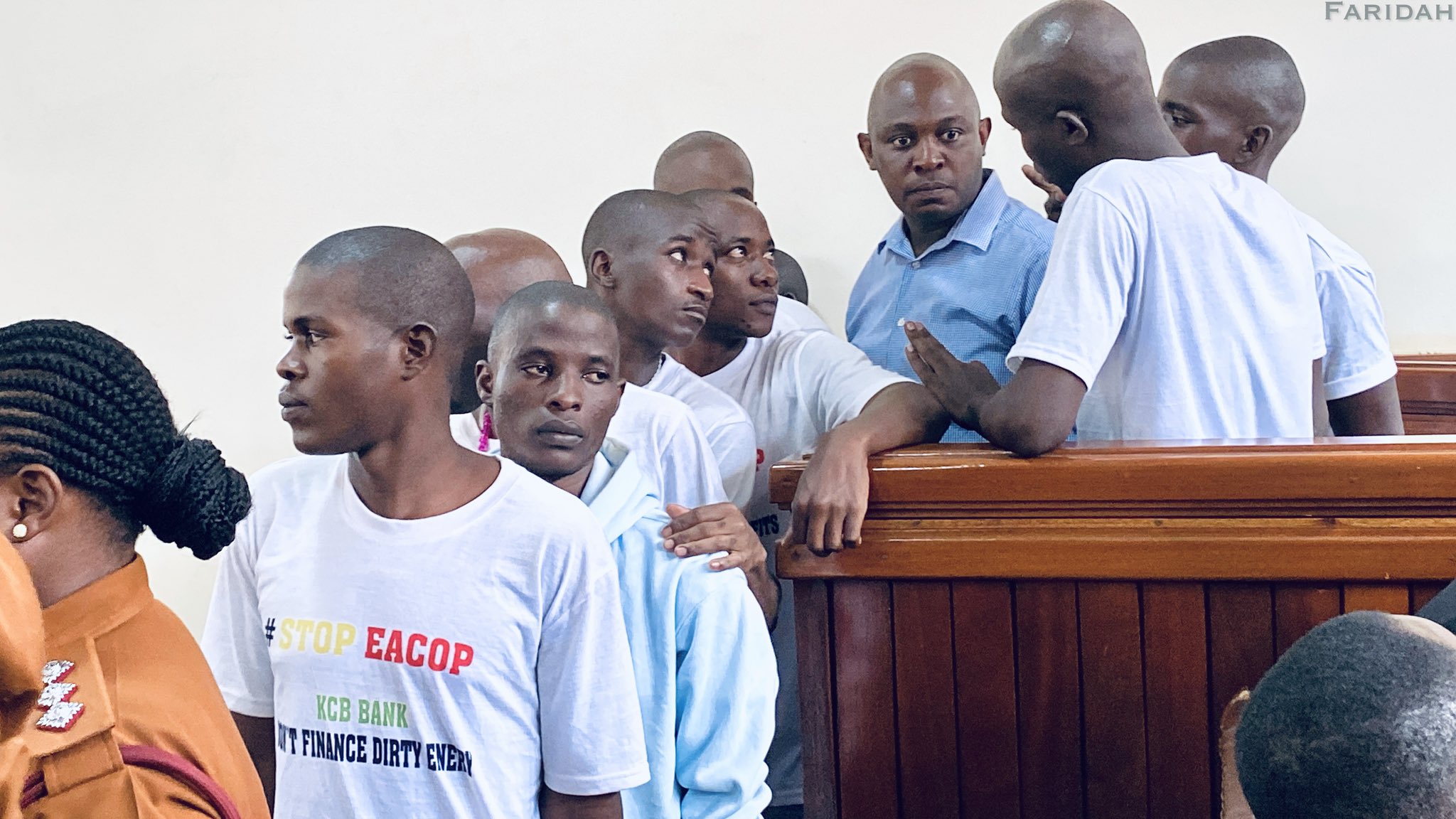
Photo by Faridah Mbabazi
By time of the case was dismissal on 29th September 2026, the KCB11 had spent more than 17 months battling criminal charges adjournment after another without a single prosecution witness having testified. At the September 8 hearing, the court adjourned the case to September 29 and gave the prosecution what was described as a final opportunity to present witnesses, with the possibility of dismissal if the prosecution again failed to proceed.
A similar pattern has been visible in the Rooted in resistance cases when eight young activists were convicted in April 2026 and sentenced to 11 months in prison over a 2025 Stop EACOP protesting Stanbic bank after spending nine months on remand. Their lawyers challenged the proceedings and announced an appeal.
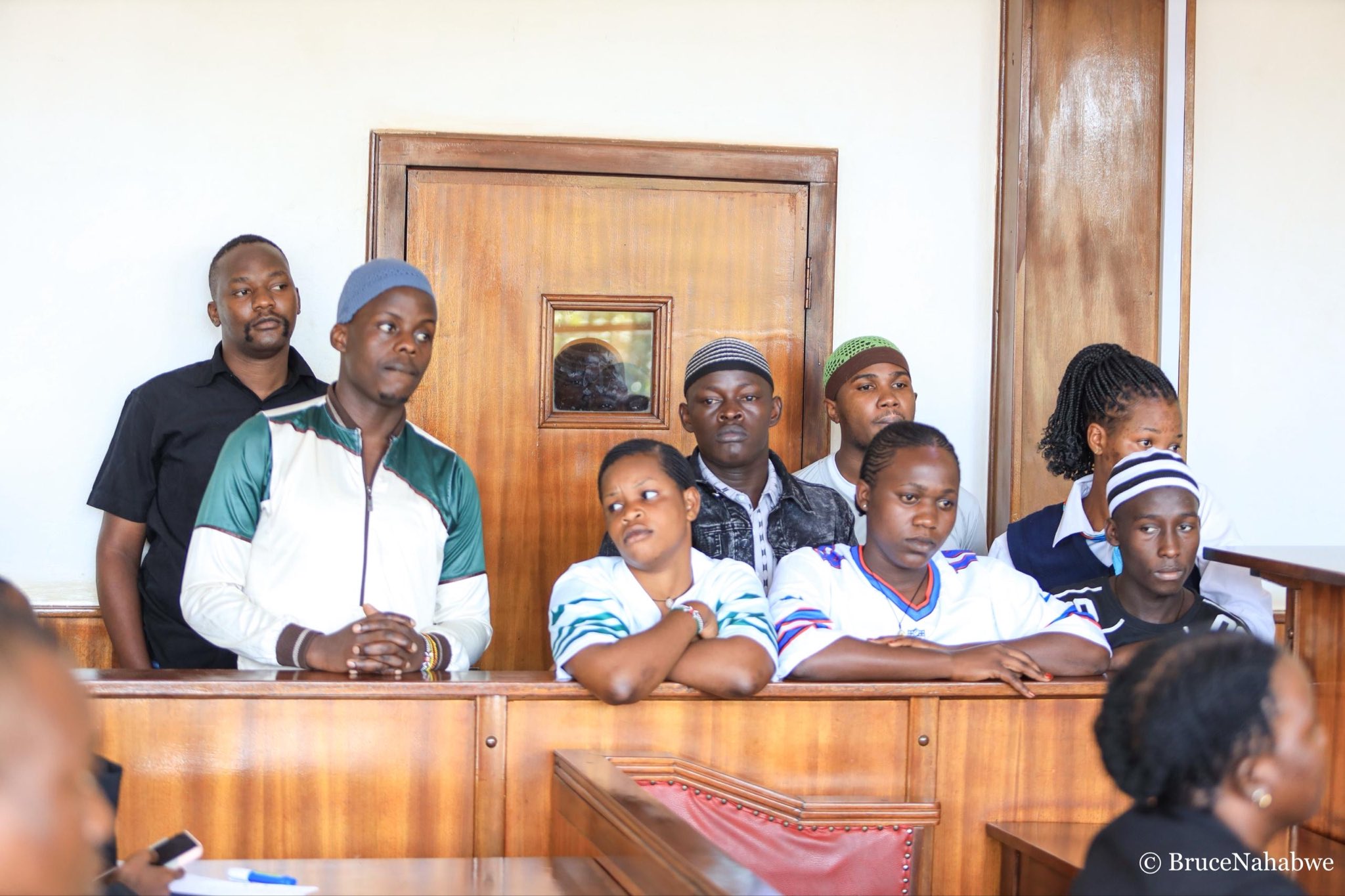
The eight activists who were convicted in April after a peaceful demonstration at stanbic bank in Uganda.
Photo by Nahabwe Bruce.
In August 2026, four more Rooted in Resistance members including Aniwallh Ssembalirwa, Hassan Mugoya, Aron Patrick Ariong and Ivan Okanya were arrested while attempting to march to Parliament to deliver an oil-sector petition and were remanded to Luzira on public-nuisance charges. Then, on August 31, police arrested another 15 anti-oil activists who had marched toward Parliament and Totalenergies’ offices to deliver a petition. They were subsequently charged with being a nuisance on a public road.
Taken together with the KCB11 case, these proceedings raise questions about the repeated use of criminal charges, arrest, prolonged remand and repeated court appearances in response to peaceful environmental and civic activities. A May 2026 American bar association review of more than 25 criminal cases involving opponents of EACOP and other oil projects identified patterns including mass arrests, broad charges relating to peaceful activity, prolonged pre-trial detention and repeated adjournments.
The recent cases reinforce the central argument of the KCB11 article that the criminal justice system can become a mechanism through which civic activism is constrained, particularly when citizens challenge powerful economic or political interests.
A 2026 American Bar Association review examined more than 25 criminal cases involving opponents of EACOP and other oil projects. It reported patterns including mass arrests, vague charges applied to peaceful activities, prolonged pretrial detention and repeated adjournments, with many cases eventually dismissed for want of prosecution. The report described these practices as a systematic pattern of repression. Human rights watch documented similar concerns earlier in 2023 finding out that environmental defenders opposing EACOP had faced arbitrary arrests, threats, intimidation and criminal charges and at least 25 arrests of largely student protesters at anti-EACOP demonstrations had been made since 2021. In one case, nine students charged with common nuisance eventually had their case dismissed after more than 15 court appearances.
If peaceful protest repeatedly results in arrest, detention and years of court appearances, only for cases to eventually collapse for lack of prosecution, what message does that send? Who, then, is failing in their duty, the police who make the arrests, the prosecution that brings and sustains the charges, the judiciary when cases are repeatedly adjourned, or perhaps the activists in protests?
Uganda’s Constitution protects freedom of expression and peaceful assembly and provides for a fair, speedy and public hearing before an independent and impartial court. Uganda is also bound by international and regional human-rights instruments protecting expression, assembly and fair-trial rights. These protections exist precisely because courts are supposed to be independent from political and economic interests. A court should determine whether an offence has been committed based on evidence and law not whether the accused person has challenged a powerful project.
A new dimension is that dissent has been criminalized, slight differences in ideology is easily reframed as hostility to national development, the civic space and legitimate criticism continues to shrink in a democratic country that upholds the rule of law.
Not to create shivers in upcoming activists, institutions should uphold and protect the law be places where evidence is tested, rights are protected and laws are upholded.