
Uncertainty lingers over affected communities’ livelihoods as EACOP nears the finish line.
On 2 September 2026, President Museveni officially named Uganda’s crude oil Pearl Sweet during his visit to the Kingfisher development area in Buhuka, Kikuube d...
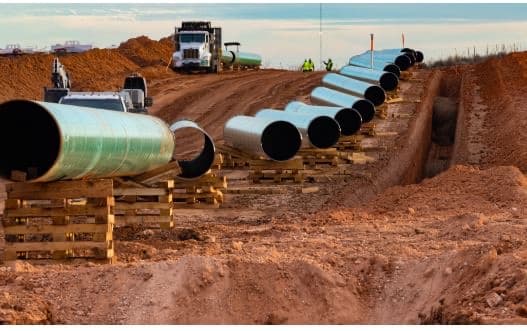
On 2 September 2026, President Museveni officially named Uganda’s crude oil Pearl Sweet during his visit to the Kingfisher development area in Buhuka, Kikuube district, where the Kingfisher central processing facility had reached mechanical completion. The name, explained as a reference to Uganda’s identity as the “Pearl of Africa” and the crude’s low sulphur content, was met with criticism from environmentalists, civil society organizations, human rights defenders and other critics who questioned whether the name reflected the environmental and livelihood impacts associated with oil development. As the East African Crude Oil Pipeline (EACOP) moves towards construction completion and Uganda’s first oil production, now expected by June 2027, the project continues to generate debate over land acquisition, compensation, livelihood restoration and environmental impacts.
The 1,443-kilometer pipeline, which runs from Uganda’s oil fields in Hoima to Tanga in Tanzania, was reported to be 92.7 percent complete in September 2026. Yet while the project approaches the finish line, some people whose land made the project possible continue to struggle to rebuild their livelihoods.
Uganda’s government is optimistic that the project’s oil production will drive the country’s economic transformation through generating significant revenue, creating jobs, increasing export earnings and supporting industrialization. It has said that the oil revenues will be used in infrastructure development such as roads, energy and other strategic developments, create opportunities for Ugandan businesses, as well as stimulate related industries, with officials projecting billions of dollars in oil-related revenue over time. However, central to the promises of national economic development, questions remain about how this will be reflected in communities that have surrendered their ancestral land to the project and whether livelihoods will be adequately restored.
To local residents, the questions raised are not only about whether compensation agreements have been signed. For rural families, land is more than an asset that can be assigned and equated to monetary value. In a country like Uganda, where agriculture remains a major source of livelihoods, land is where food is grown, homes are built, families are raised and communities maintain social connections.
EACOP reports that 99.5 percent of the compensation agreements had been signed and the same percentage of compensation payments had been made across Uganda and Tanzania. Additionally, the Parliament of Uganda reported in March that compensation of the project-affected persons was approximately 98 percent. In total, EACOP reports to have compensated 13,686 project-affected persons from the two countries.
Undeniably, the figures are significant in the process of formal compensation; however, compensation figures alone do not necessarily tell whether affected families have been able to rebuild their lives.
Affected people say that even though restoration programs have been put in place, they have not improved their lives. Transitional support, replacement housing, distribution of agricultural inputs, and livelihood restoration programs had been initiated and put in place by EACOP. Other PAPs said that the cash compensation was insufficient to purchase replacement land of a similar size. When a project disrupts the environment and takes someone’s land, can paying compensation be enough if the person can’t restore the life they built around the compensated land? This is the question raised by the controversy surrounding the construction of the project.
Since its development, Uganda’s oil development has been presented as an opportunity for economic transformation, part of a broader ambition pursued to drive the country from third-world to second-world status. However, before the project is celebrated as complete, attention should be given to frontline communities whose land and livelihoods have been sacrificed to make the project possible, because, for a farmer who lost their land, completion of the project might not necessarily mean recovery of their lost livelihood. To the PAPs, it is uncertainty for the future.
As EACOP maintains that its land acquisition processes followed Ugandan laws and international standards, including International Finance Corporation (IFC) Performance Standards, in Lwengo, Kyotera, and Rakai, over 50 people who were affected by the project sought a retrial in a compensation dispute, alleging that they had not been given adequate opportunity to argue their case before orders of compulsory acquisition and eviction were issued. Such disputes do not mean the compensation process entirely failed.
For communities with limited power to influence major development decisions in their communities, the consequences can be profound. When land is taken for a large infrastructure project, those who entirely depend on it for their livelihoods can face the greatest disruption, even when the project has been presented as a national economic opportunity. Thus, recovery for a displaced family can be measured by whether they can once again live with dignity, security and sustainable livelihoods.